
That subtle click when you press the brake pedal, the tiny stone chip on your windshield, or the faint squeak echoing from under the hood during a cold morning start, most drivers have experienced these minor annoyances. In the busyness of daily life, it is tempting to turn up the radio and pretend those small warning signs do not exist. After all, the car still starts, steers, and gets you where you need to go.
However, ignoring early warning signs is a dangerous and expensive gamble. Automobiles are complex mechanical systems composed of thousands of moving parts working in precise synchrony. When one component begins to fail, it rarely fails in isolation. Instead, it places extra stress on surrounding systems, initiating a costly domino effect. What could have been a quick, inexpensive fix can quickly escalate into a catastrophic mechanical breakdown, leaving you stranded on the side of the highway with a massive repair bill.
Fixing minor vehicle issues immediately saves you money, protects your car’s resale value, prevents sudden breakdowns, and safeguards your legal standing if an accident occurs. Taking a proactive approach to vehicle care pays major dividends over the life of your automobile.
The Compound Effect of Vehicle Neglect

Automotive components do not exist in a vacuum; mechanical, electrical, and hydraulic systems depend heavily on one another. When a minor issue develops, it alters the operational balance of the entire vehicle. Modern automobiles are engineered with fine tolerances, meaning that an offset in one subsystem creates parasitic loads across connected mechanical assemblies.
Consider a worn rubber suspension bushing. A single bad bushing costs very little to replace. However, if left ignored, that worn bushing allows the suspension arm to shift slightly out of alignment. This minor structural displacement causes uneven tire wear, ruining a expensive set of tires prematurely. The altered wheel geometry then places unusual side-loads on wheel bearings and steering linkages, accelerating their wear. Within a few thousand miles, a minor rubber bushing issue snowballs into a massive repair requiring new tires, a four-wheel alignment, wheel bearings, and steering components.
Understanding the difference between routine wear-and-tear and active mechanical damage is key to avoiding these compounded costs. Wear-and-tear is the predictable degradation of consumable items like wiper blades or brake pads over time. Active mechanical damage occurs when a worn component begins actively destroying adjacent parts. Catching these subtle declines early requires staying attentive during daily drives, monitoring fuel economy trends, and listening for unusual vibrations during low-speed maneuvers.
Stopping Mechanical Disasters Before They Start
The financial argument for immediate vehicle repair is overwhelming. Major mechanical failures almost always start as minor, inexpensive defects that go unaddressed. A simple rubber coolant hose costs very little to purchase and takes under an hour to install. If that aging hose develops a pinhole leak and is ignored, the engine will gradually lose coolant over several days. The driver might notice the temperature gauge creeping up slightly higher than usual or see a small plume of steam at a red light, but choose to push onward.
If ignored further, the engine overheats severely. Excessive thermal expansion warps the aluminum cylinder head, blows the head gasket, and allows pressurized coolant to mix with the engine oil. Once oil is diluted with coolant, it loses its viscosity and lubricating properties, causing internal engine bearings to seize. A minor hose leak converts into a complete engine overhaul costing thousands of dollars.
Establishing a dedicated relationship with a certified auto shop before an emergency strikes is one of the smartest financial moves a vehicle owner can make. Building a rapport with an auto repair center during routine oil changes and minor inspections gives you a trusted advisor who can help you prioritize upcoming maintenance based on actual urgency rather than fear.
Prioritizing Your Vehicle’s Critical Stopping System
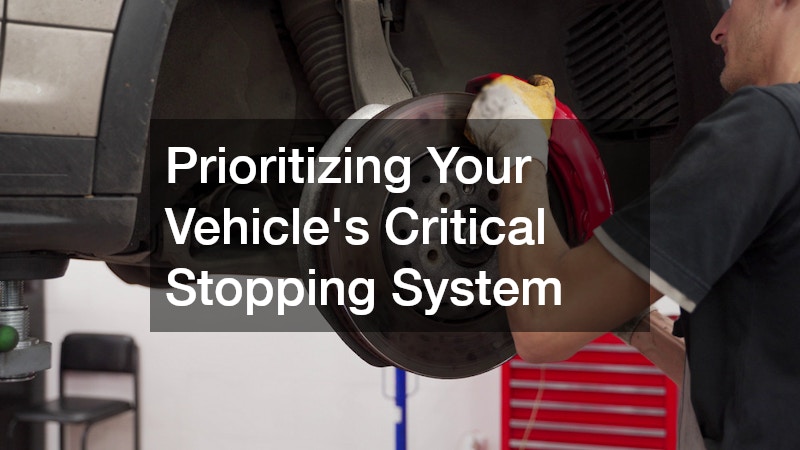
Few systems on your vehicle are as vital to your personal safety as the braking system. Friction is the fundamental physical principle that brings thousands of pounds of moving metal to a complete stop. Every time you press the brake pedal, soft friction material is squeezed against a smooth metal disc, gradually thinning out over time.
Brake manufacturers design friction pads with built-in metallic wear indicators. When the pad material wears down to a critical threshold, this small metal tab contacts the rotor, producing a high-pitched squealing sound. This sound is a deliberate warning that it is time for routine maintenance. If you address the squeal promptly, the fix is straightforward: install new pads and resurface or replace the rotors.
However, if you ignore the squeal, the friction material wears away entirely, leading to “metal-on-metal” contact where the steel backing plate grinds directly into the rotor face. This metal-on-metal friction generates extreme heat that transfers into the hydraulic brake caliper, destroying internal rubber piston seals and causing the caliper to seize or leak fluid. What started as a simple service at a general facility can quickly escalate into a complete system overhaul requiring new calipers, hoses, rotors, and pads.
Worse yet, compromised brakes drastically increase stopping distances during emergency stops at highway speeds. Visiting a specialized brake shop at the first sign of pulsation or noise ensures your vehicle stops predictably every time, while routine maintenance at a brake repair facility preserves system longevity and prevents hydraulic failure.
Preserving Structural Integrity and Cabin Visibility
Vehicle maintenance involves more than just keeping the engine running and the wheels turning; it also requires protecting structural integrity and environmental comfort. Two areas where minor defects rapidly expand into major headaches are windshield glass and cabin climate control systems.
A tiny rock chip on your windshield might seem like a minor cosmetic flaw, but windshields are structural safety components made of laminated safety glass. They provide structural strength to the roof during a rollover accident and act as the physical backstop for the passenger-side airbag during deployment. When a stone strikes the glass, it creates a point of weakness. Temperature fluctuations cause the glass to expand and contract. Turning on the defroster on a freezing winter morning creates severe thermal stress across the glass, causing a tiny chip to suddenly spider-web across the entire windshield in a fraction of a second. A rock chip can often be fixed in minutes, whereas delayed windshield repairs lead to full glass replacements and expensive camera recalibrations for modern driver-assistance systems.
Similarly, ignoring minor climate control issues can cause severe mechanical damage inside the HVAC assembly. A faint grinding noise or weak cooling often signals low refrigerant levels or a failing compressor clutch. In modern automotive heating and cooling systems, the refrigerant carries lubricating oil throughout the system to keep the compressor healthy. Running an air conditioner low on refrigerant starves the compressor of lubrication, causing internal piston components to grind against each other and shed microscopic metal shavings throughout the entire system. This catastrophic failure contaminates the condenser, expansion valve, and evaporator coils. What could have been a simple car ac repair to seal a small O-ring leak turns into a total system flush and multi-component replacement.
Protecting Your Health, Safety, and the Environment

Deferring vehicle maintenance introduces hidden hazards that directly threaten your physical health, your passengers, and the environment. While mechanical failures leave you stranded, atmospheric leaks and neglected exhaust components quietly compromise cabin air quality and driving safety.
An exhaust system routes toxic combustion gases, including carbon monoxide, hydrocarbons, and nitrogen oxides, away from the passenger cabin and cleans them using a catalytic converter. A minor exhaust leak, such as a cracked manifold or rusted exhaust pipe flange, allows these dangerous fumes to escape under the floorboards. At low speeds or while idling in traffic, these toxic gases can enter the cabin through climate control vents, causing drowsiness, headaches, and impaired reaction times for the driver.
Similarly, driving on improperly inflated or misaligned tires causes uneven tread wear, compromising the tire’s ability to channel water away from the contact patch during heavy rain and drastically increasing the risk of hydroplaning. Furthermore, neglected tires place excessive radial loads on wheel bearings and steering gear. Selecting a reliable auto repair service is essential for addressing these subtle environmental and safety issues. Reputable auto shops utilize specialized digital diagnostic tools, such as infrared cameras and gas leak detectors, to identify exhaust leaks and alignment issues long before they cause physical harm.
The Legal and Financial Fallout of Neglected Maintenance
While the physical consequences of vehicle neglect are clear, many drivers fail to realize the legal fallout that can result from ignoring minor repairs. If you are involved in a traffic collision, the physical condition of your vehicle becomes a primary focal point during investigations conducted by law enforcement officers and insurance adjusters.
In motor vehicle litigation, the legal concept of negligence centers on whether a driver exercised reasonable care in operating and maintaining their vehicle. Operating a vehicle with known mechanical defects, such as bald tires, a cracked windshield obstructing vision, or failing brakes, can be classified as comparative or contributory negligence. For instance, if another vehicle cuts you off unexpectedly and you rear-end them, you might normally be cleared of fault. However, if an investigation reveals that your vehicle took an extra 30 feet to stop because your brake pads were worn down to the metal, fault may be shared, leading to denied insurance claims and severe personal liability.
If you are involved in an incident caused by another party’s vehicle neglect, or if a service center performed negligent repairs, seeking guidance from auto accident legal services becomes necessary to protect your rights. Having a documented paper trail showing that you consistently invested in professional auto repairs establishes that you are a responsible vehicle owner who exercises due care. Keeping a centralized binder containing every repair receipt proves your vehicle met factory safety standards prior to any collision.
Creating an Actionable, Stress-Free Maintenance Plan
Transitioning from a reactive mindset (fixing things only when they break) to a proactive mindset (maintaining components so they do not break) eliminates the stress and financial panic associated with vehicle ownership. The best roadmap for your vehicle is sitting inside your glove box: the factory owner’s manual. Vehicle manufacturers spend thousands of hours testing components to establish precise service intervals. Following these scheduled intervals ensures that key fluids, belts, and filters are replaced just before their failure rates climb exponentially.
To manage your maintenance budget effectively without feeling overwhelmed, categorize repairs into three distinct tiers:
- Immediate Safety Issues: Critical systems including brakes, tires, steering linkages, and severe fluid leaks that must be fixed immediately before driving the vehicle further.
- Upcoming Maintenance: Secondary issues such as seeping gaskets, worn shocks, aging batteries, and drive belts that should be scheduled for repair within 30 to 60 days.
- Cosmetic and Convenience Concerns: Non-essential items including interior trim, minor paint chips, and weak hood struts that can be saved for when budget permits.
Categorizing repairs using this structured approach removes emotion from the decision-making process. It allows you to address safety-critical components immediately while planning ahead for secondary repairs, ensuring your budget remains balanced and your vehicle stays roadworthy. Setting calendar reminders for seasonal maintenance and combining related services during a single shop visit also saves significantly on duplicate labor fees.
Taking Control of Your Vehicle’s Longevity
Vehicle ownership does not have to be an unpredictable financial journey filled with sudden breakdowns and stressful emergency repair bills. By shifting your perspective and viewing minor issues as helpful early warning signals rather than annoying inconveniences, you take full control over your vehicle’s reliability and financial impact.
Fixing a tiny stone chip, replacing a squeaking brake pad, topping off fluid levels, or fixing a minor cooling leak might feel like small tasks in the moment, but their cumulative effect is substantial. Proactive maintenance protects your household budget from catastrophic repair bills, preserves your vehicle’s resale value, protects your health and safety on the road, and provides peace of mind whenever you turn the key. Address those minor issues today, your wallet, your safety, and your future self will thank you.