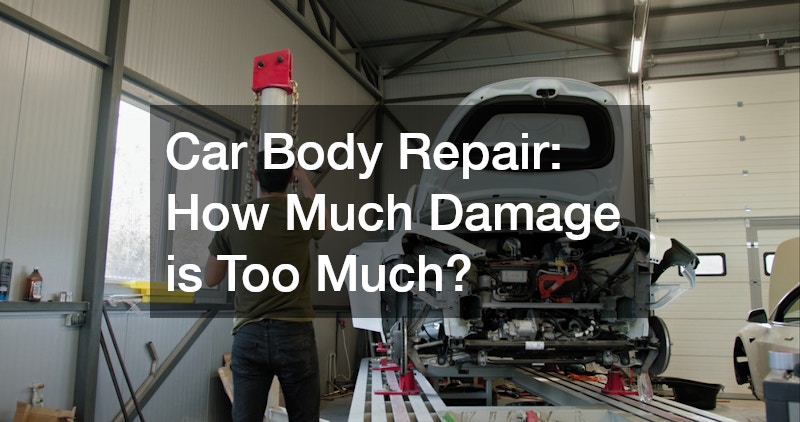
When dealing with car body repair, determining the extent of damage is crucial for both safety and financial reasons. Various factors, such as the location and severity of the damage, influence whether a car can be effectively repaired or should be declared a total loss. Ignoring significant damage can lead to severe safety issues down the road, posing risks to drivers and passengers.
Typically, the decision of whether to repair a compromised structure depends on a thorough inspection by a certified auto body technician. This meticulous process is essential to ensure the vehicle retains its structural integrity and meets safety standards.
Car body repair involves more than just cosmetic restoration; it’s about ensuring the vehicle operates safely. A car with a seemingly minor dent or scratch might hide deeper issues, compromising the car’s ability to perform adequately in crash scenarios. Damage related to the crumple zones or frame can significantly affect a vehicle’s structural integrity, requiring professional assessment. Furthermore, advanced materials and technologies in modern vehicles often require specialized repair techniques, underscoring the importance of expert evaluation. Ultimately, assessing damage thoroughly avoids future complications and ensures the vehicle remains roadworthy.
Safety is paramount in considering whether to proceed with car body repair. Beyond appearance, the functionality of critical components like airbags or braking systems can be affected by even minor crashes. Therefore, professional assessment helps pinpoint hidden damages that may not be visible to the untrained eye, safeguarding unsuspecting drivers. A proper inspection not only considers visible damage but delves deeper into potential underlying problems. This holistic approach helps car owners make informed decisions regarding repairs, balancing safety and economic considerations effectively.
Cost Implications and Financial Considerations
Financial implications are a major consideration when deciding on car body repair. The cost of repairs can vary widely depending on the damage and the type of vehicle. For car owners, understanding the cost-benefit ratio of repairing versus replacing is vital to making a sound financial decision. Often, small dents and scratches are cost-effective to repair and do not require significant investment. However, substantial damage, especially involving key mechanical components, might lead to expenses that surpass the car’s current market value.
It is important for car owners to weigh the repair costs against the long-term value of their vehicle. If repair costs are about or exceed the vehicle’s value, replacing the vehicle might be the wiser financial choice. Additionally, discussing options with a trusted mechanic or body shop can provide insights into the extent of cost-effective repair methods. Keeping abreast of the latest repair technologies can also help in cutting costs, as advancements often offer cheaper and equally effective alternatives. Ultimately, careful financial deliberation is necessary to prevent unnecessary expenditure on a vehicle that might not be worth saving.
Insurance policies play a crucial role in financing car body repairs. Understanding the policy’s coverage limits and deductibles is essential in estimating out-of-pocket expenses. Comprehensive coverage might soften the blow of expensive repairs, but it’s crucial to confirm what types of damage are included. Furthermore, it’s advisable for car owners to read the fine print of their policies to prevent surprises at the time of claim settlement. By effectively utilizing their insurance coverage, car owners can mitigate costs and ensure their vehicles are restored to optimal condition without a financial strain.
Making the Decision
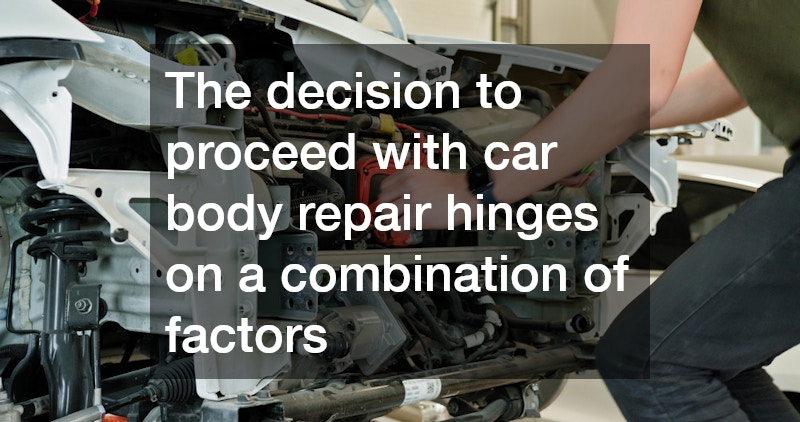
The decision to proceed with car body repair hinges on a combination of factors, including safety, financial implications, and technological feasibility. It’s essential to conduct a comprehensive evaluation of the damage, considering both visible and latent issues, to maintain vehicle safety and integrity. While minor damages may seem innocuous, overlooking them could lead to more significant problems over time. Furthermore, weighing the cost of repairs against the car’s worth can ensure economically sound decisions are made. Consulting with industry experts and relying on advanced diagnostic tools will provide the necessary insights for this critical decision.
Technological progress in the car repair industry offers advanced solutions that benefit both safety and aesthetic restoration. These innovations not only make repairs more efficient but also elevate the standards of quality and precision. By embracing these advancements, repair shops can offer superior services that ensure vehicles are returned to their prime condition post-accident. Moreover, the evolution of materials and repair methodologies means that even severe damage can often be remedied effectively. As technology continues to advance, the potential to repair rather than replace damaged vehicles grows.
The landscape of car body repair is ever-evolving, driven by technological advancement and consumer awareness. Car owners are encouraged to stay informed about the latest developments in repair technologies, insurance coverage, and cost-effective strategies. Making informed decisions not only protects the owner’s investment but also ensures the safety of all road users. Whether dealing with minor scratches or significant structural damage, leveraging professional advice and utilizing modern techniques is crucial. Ultimately, understanding the complexities of car body repair facilitates responsible decision-making that balances both safety and financial prudence.